
Table of Contents
- Why Organizations Are Moving Beyond Cloud GPU Services
- Bare Metal Server for Deep Learning Workloads
- Private Cloud Hosting for AI Infrastructure
- Specialized GPU Cloud Platforms vs. Hyperscalers
- AI Infrastructure Cost Analysis and Total Cost of Ownership
- Free and Entry-Level Alternatives for Prototyping
- Making the Transition: Implementation Hurdles and Solutions
- Frequently Asked Questions
Last Updated: September 28, 2026
Why Organizations Are Moving Beyond Cloud GPU Services
Cloud GPU services like AWS and Google Cloud have dominated AI infrastructure for years. But they’re not the only option anymore, and they’re often not the best one. Organizations are increasingly discovering that cloud GPU costs spiral unpredictably, resource availability fluctuates, and vendor lock-in creates long-term constraints. According to Gartner’s 2026 Peer Insights analysis, enterprises are actively comparing specialized GPU cloud providers and alternative infrastructure models against traditional hyperscalers for better cost efficiency and performance control.
The shift isn’t about rejecting cloud entirely, it’s about recognizing that alternatives to cloud GPU for AI training exist and deliver superior value for specific workloads. Bare metal servers, private cloud hosting, specialized GPU platforms, and custom silicon solutions each solve different problems that generic cloud services struggle with.
ServerPronto helps organizations evaluate these alternatives and transition to infrastructure that fits their AI workflows. ServerPronto helps organizations evaluate these alternatives and transition to infrastructure that fits their AI workflows, offering full root access and predictable pricing.
The biggest mistake organizations make is assuming “cloud” and “GPU” are synonymous. They’re not. Dedicated GPU platforms, bare metal servers, and private cloud environments often outperform traditional hyperscalers for AI training, especially at scale.
Bare Metal Server for Deep Learning Workloads
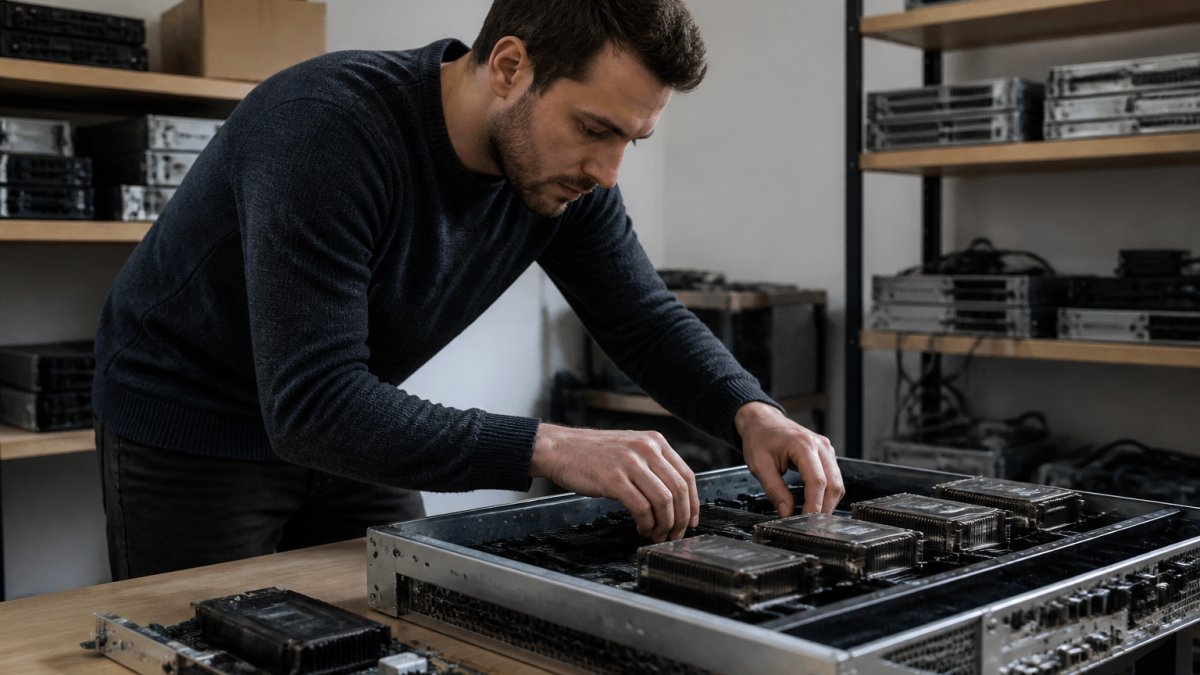
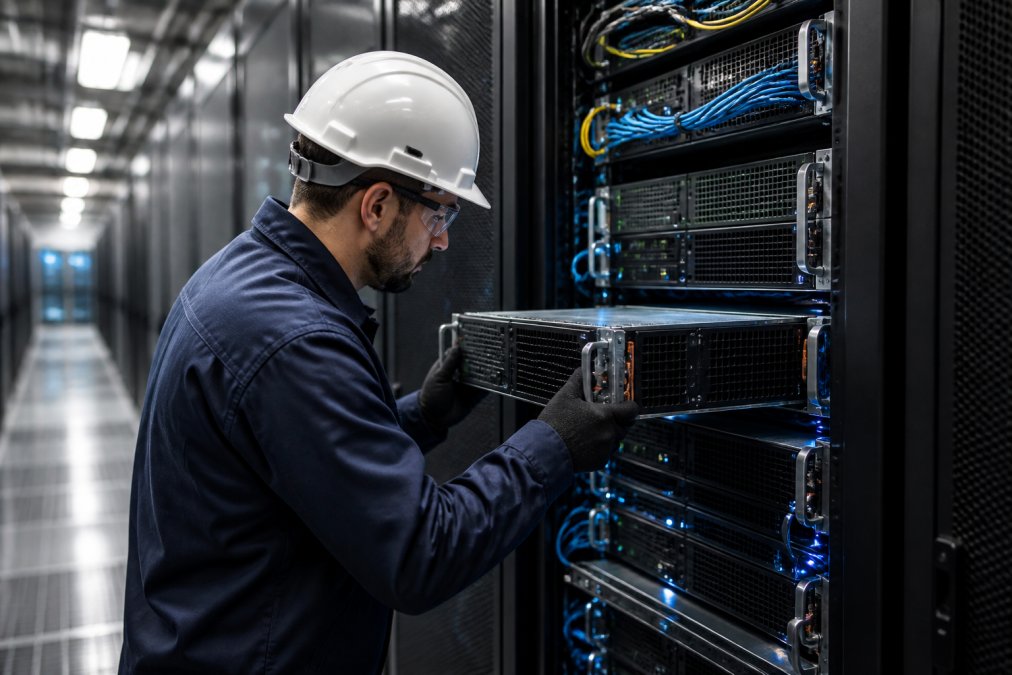
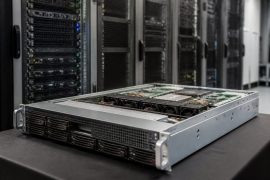
Bare metal servers provide direct hardware access without virtualization overhead, no hypervisor, no noisy neighbors, no resource contention. For deep learning workloads demanding consistent performance, this matters.
Performance and Scalability Benefits
Bare metal eliminates virtualization overhead, allowing GPU cores to run at full speed without hypervisor interference. This delivers faster training times and more predictable throughput for distributed workloads.
Scalability works differently on bare metal than cloud: you provision dedicated hardware with zero contention. When your model needs 8 GPUs, all 8 are yours alone, no throttling, no surprise performance drops during peak hours.
For large-scale distributed training, bare metal clusters offer superior networking via direct GPU-to-GPU communication (like NVIDIA NVLink), reducing latency and increasing throughput. Cloud environments virtualize these connections, adding overhead that compounds across jobs.
ServerPronto’s bare metal GPU servers provision in under 2 hours with full root access, letting you control drivers, CUDA versions, and networking configurations without waiting for cloud provider updates.
When Bare Metal Makes Sense
Bare metal works best for predictable, sustained workloads. If your team trains models continuously over weeks or months, the per-hour cost advantage becomes obvious, you pay for dedicated hardware you control completely, not idle capacity.
Bare metal also makes sense when you need specific hardware configurations (AMD Instinct GPUs or older NVIDIA architectures for legacy code compatibility). Cloud providers limit hardware choices; bare metal gives you flexibility.
Consider bare metal when data sovereignty matters: your training data stays on your hardware with no data egress fees or compliance complexity around cloud storage regions.
The tradeoff: bare metal requires upfront capital investment and ongoing management (updates, security patches, hardware failures). This works for teams with dedicated infrastructure engineers.
Private Cloud Hosting for AI Infrastructure
Private cloud sits between bare metal and public cloud, offering dedicated infrastructure managed by a provider with bare metal control and cloud simplicity. Private cloud hosting for AI has gained traction among enterprises managing sensitive workloads or requiring infrastructure isolation.
Data Sovereignty and Control
Private cloud environments run on dedicated hardware your organization controls, keeping data on-premises. This eliminates compliance complexity around data residency, encryption key management, and regulatory audits.
For organizations handling sensitive training data, healthcare, finance, government, private cloud removes the risk of data exposure across shared infrastructure. You maintain full encryption keys, audit logs, and access controls.
Performance characteristics match bare metal: no noisy neighbors, no resource contention, no surprise throttling. Your GPU clusters run at full capacity without interference.
Pricing becomes predictable with fixed monthly fees, unlike cloud services where costs scale with usage spikes.
Hybrid Deployment Strategies
Many organizations combine infrastructure models: development teams prototype on affordable cloud GPU platforms like RunPod or Google Colab, while production training runs on bare metal or private cloud where cost-per-epoch is lower and performance is consistent.
This hybrid approach optimizes for different lifecycle phases: early-stage experimentation benefits from cloud’s flexibility, while mature models benefit from bare metal’s cost efficiency.
Another hybrid pattern: use cloud for burst capacity. Baseline training runs on bare metal; overflow to cloud GPU services during spikes. This prevents over-provisioning while keeping baseline costs low.
ServerPronto supports this hybrid strategy with dedicated GPU servers and private cloud colocation, letting teams run baseline workloads on bare metal and scale to cloud resources when needed.
Hybrid infrastructure isn’t a compromise. It’s a deliberate strategy that matches each workload to the infrastructure model that optimizes for cost, performance, and operational overhead.
Specialized GPU Cloud Platforms vs. Hyperscalers
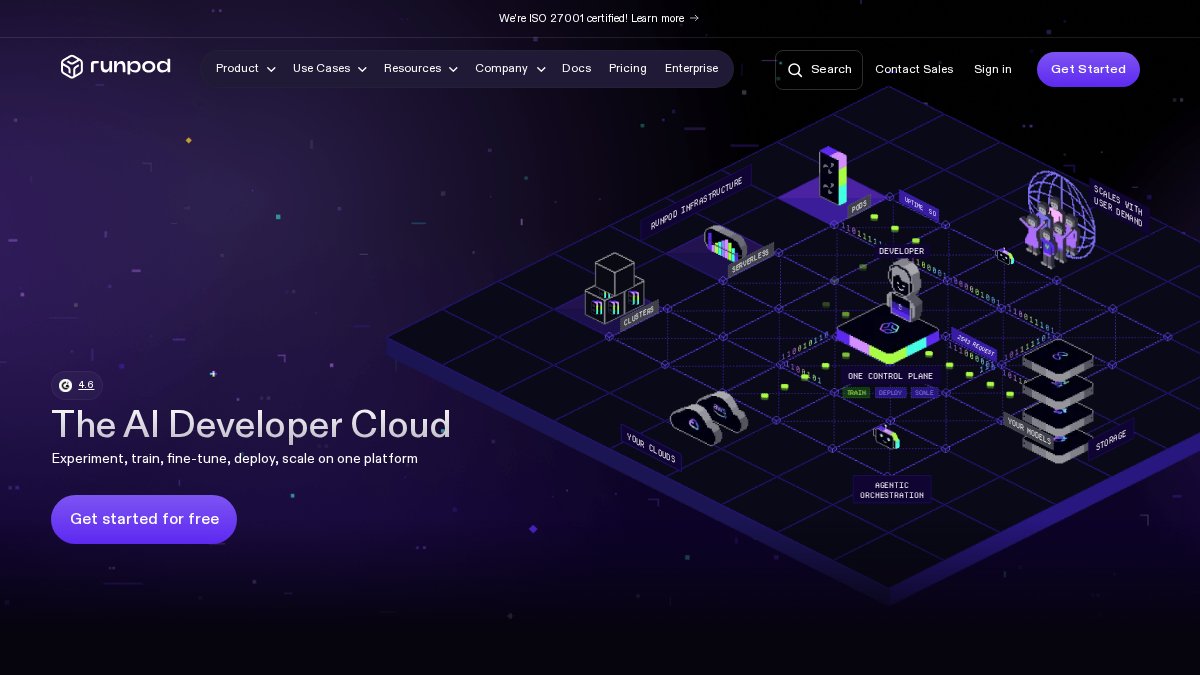
Specialized GPU cloud providers like RunPod, Lambda Labs, and CoreWeave optimize specifically for AI training, competing on price, hardware availability, and ease of use rather than broad cloud services.
| Provider | Starting Price | Best For | Key Advantage |
|---|---|---|---|
| RunPod | $0.20/hr | Flexible, cost-conscious AI teams | Competitive pricing, fast deployment |
| Lambda Labs | $1.00/hr | Teams needing dedicated clusters | Optimized for deep learning, transparent pricing |
| CoreWeave | Contact for pricing | Enterprise-scale distributed training | Massive GPU inventory, Kubernetes-native |
| Google Colab | Free (limited) | Prototyping and learning | Zero setup, browser-based, ideal for entry-level |
| Vast.ai | $0.05/hr | Budget-conscious developers | Decentralized marketplace, lowest cost |
Dedicated Providers: RunPod, Lambda Labs, and CoreWeave
RunPod specializes in on-demand GPU instances and serverless endpoints, with containers deploying in minutes. This works well for teams needing flexibility without cloud complexity.
Lambda Labs targets AI researchers training large models with dedicated NVIDIA H100 and A100 clusters optimized for distributed training. Availability is more reliable for critical training jobs.
Custom Silicon: AWS Trainium and Google Cloud TPU
AWS Trainium and Google Cloud TPU represent a different approach: custom silicon designed specifically for AI workloads rather than general-purpose GPUs.
Custom silicon offers genuine performance advantages for specific workloads, but the code adaptation requirement and vendor lock-in create long-term costs that aren’t reflected in hourly pricing. Evaluate the total cost of ownership, including rewrite effort.
AI Infrastructure Cost Analysis and Total Cost of Ownership
AI infrastructure cost analysis requires examining capital expenditure, operational expenditure, and hidden costs across the entire workload lifecycle, not just hourly pricing.
Capital Expenditure vs. Operational Expenditure
Cloud GPU services are pure operational expenditure (OpEx). You pay hourly, no upfront investment. This appeals to teams with unpredictable workloads or limited budgets.
Breakeven depends on usage.
Benchmarking Performance-to-Cost Ratios
Cost per training epoch is the metric that matters. A cheaper GPU that trains 10% slower might be more expensive in total cost.
Free and Entry-Level Alternatives for Prototyping
Not every AI project needs expensive infrastructure from day one. Google Colab and Kaggle Kernels offer free GPU access for prototyping.
Making the Transition: Implementation Hurdles and Solutions
The common hurdles:
Data migration. Training data in cloud storage (S3, GCS, Azure Blob) requires planning off-peak transfers or negotiating direct data center connections to avoid egress fees.
| Challenge | Solution | Timeline |
|---|---|---|
| Data migration | Plan off-peak transfers, negotiate direct connections | 1-2 weeks |
| Code adaptation | Containerize with Docker, abstract cloud dependencies | 1-3 weeks |
| Networking setup | Work with provider’s technical team | 1 week |
| Monitoring stack | Deploy Prometheus + Grafana | 3-5 days |
| Team training | Hire infrastructure expertise or partner with provider | Ongoing |
Frequently Asked Questions
What is the best alternative to cloud GPU for AI training?
The best alternative depends on your workload and budget. Bare metal servers offer exclusive resources and predictable costs for long-term training projects. Private cloud hosting provides data sovereignty and control. For prototyping, free platforms like Google Colab work well. For production-scale work, specialized GPU providers like RunPod and Lambda Labs often deliver better cost-efficiency than hyperscalers. Organizations increasingly adopt hybrid strategies, combining multiple infrastructure types for different workload phases.
Is bare metal hosting more cost-effective than cloud GPU for AI training?
Bare metal servers typically offer better total cost of ownership for sustained, high-volume training workloads. Cloud GPU services charge per hour with no long-term commitment, making them ideal for variable workloads. However, if your team runs continuous training jobs over months, bare metal eliminates per-hour fees and provides exclusive, unshared resources. The break-even point depends on hardware specifications, utilization rates, and your organization’s ability to manage infrastructure in-house.
What are the primary drawbacks of using public cloud GPU services?
Public cloud GPU services face several challenges: unpredictable costs accumulate quickly with high-volume training, resource availability fluctuates during peak demand, you share underlying infrastructure with other tenants affecting latency and throughput, and long-term commitments often lock you into specific providers. Additionally, data residency concerns and compliance requirements may conflict with public cloud policies. These factors drive enterprises toward dedicated infrastructure or private cloud hosting alternatives.
How does private cloud hosting compare to public cloud GPU for security?
Private cloud hosting provides complete data sovereignty, keeping your models, training data, and infrastructure within your control. Public cloud GPU services store data on shared infrastructure managed by the provider, introducing compliance risks for regulated industries. Private cloud enables you to enforce custom security policies, manage encryption keys independently, and meet data residency requirements. For organizations handling sensitive intellectual property or operating under strict regulatory frameworks, private cloud hosting eliminates the shared-tenancy risks inherent in public cloud GPU services.
When should a business transition from cloud GPU to dedicated infrastructure?
Transition when your organization runs consistent, predictable AI workloads over extended periods, when monthly cloud bills exceed the cost of dedicated hardware amortized monthly, when you require exclusive resources for performance guarantees, or when data sovereignty and compliance become critical constraints. Teams training large language models continuously, running distributed training across multiple nodes, or operating in regulated industries typically find dedicated or private cloud infrastructure more economical and operationally suitable than cloud GPU services.





Comments are closed.