
Author

Maria Mendez

Browsing

A data center is the place where the computing, storage, networking and virtualization technologies that are required to control the life cycle of the information generated and managed by a company are centralized.

It plays a fundamental role in the company operations, since data centers help them to be more efficient, productive and competitive. At the same time, they adjust to the new needs of the businesses and respond quickly to even the most demanding consumers.

Data centers have adapted to this new reality and have developed services, not only to store valuable information of a company, but also with the purpose of automating processes and guaranteeing that each enterprise takes advantage of 100% of their data.

How a data center can help your business

  • Higher productivity– By having a data center, companies can increase their agility and productivity by simplifying their administrative processes and obtaining flexible and scalable environments that meet each of their objectives. Most companies and individuals have to deal with problems related to the flow of their work, customer service, and information management on a daily basis. All these situations distract the management teams, impairing their ability to keep the boat afloat and focus on sales or product development.
  • Technological flexibility– Through data centers, companies can also obtain flexibility in their technical infrastructure, since part of their information can be migrated to the cloud, operated on internally, or given to a third party. It brings other benefits such as low operating costs, high levels of security, and confidentiality of their information.
  • Automatization– A data center can help automate your processes and services. Thanks to advances in artificial intelligence, now you can establish automated customer service channels and monitor the tasks of each area of ​​your company through project management platforms.
  • Physical security– A data center provides an efficient team to perform a series of activities, such as monitoring alarms (and in some cases, calling security agents for emergencies), unauthorized access, controlling access through identity confirmation of the collaborator, issuing reports, and answering telephone and radio calls.
  • Refrigeration and Energy– Excellent cooling and energy systems ensure the proper functioning of equipment and systems within a data center. Refrigeration plays the role of maintaining the temperature of the environment at the right levels so that everything operates in perfect condition. Generally, to avoid damage and problems with the power supply, the system as a whole has no-breaks and generators, in addition to being powered by more than one power substation. This ensures performance and efficiency — your business does not need to invest in either of these critical services, saving you a lot of money.  
  • Business visibility– Companies can have visibility into the traffic of their data centers, both physical and virtual, since they allow gathering business intelligence information, identifying trends and acting quickly and intelligently. This facilitates quick decision making.


You can try to establish your servers, with limited human resources and resources at hand, to protect all your know how, or you can trust an expert and ensure the computer security of your company and the welfare of your business — but a data center is always a good option. You get everything you need with an affordable price and all the features you would want.

Data centers must be designed with an appropriate infrastructure to support all the services and systems of the company, in such a way as to allow the perfect functioning of the center and foresee its future growth by adapting to emerging technologies.

Do not forget that the primary function of a data center is to provide technology services for the development of your operations and ensure the integrity and availability of your business information. So make sure your provider helps solve the needs of your company. In a world where information has become an invaluable asset, each company is tasked with making the best use of their data and protecting themselves.
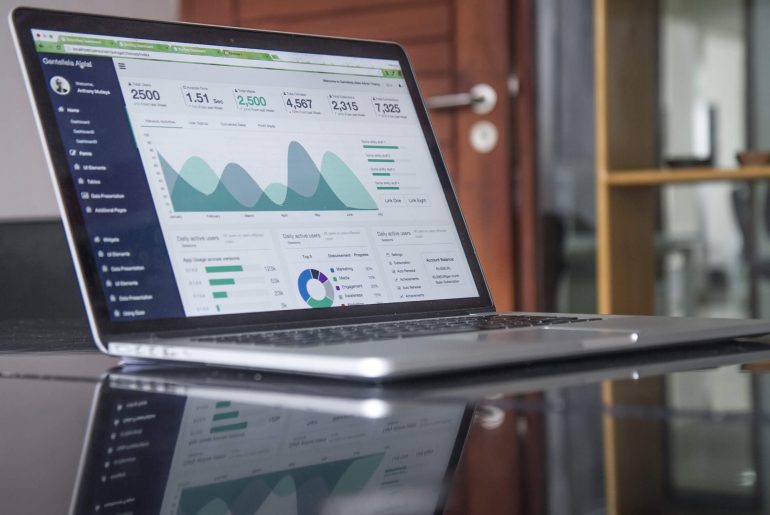

It is said that data is the new oil of this era because it nourishes the economy in one and a thousand ways. Social networks, search engines, and e-commerce platforms use data to generate personalized ads; some companies use it to optimize processes and thus save money or to create products increasingly oriented to the needs of their customers.

The point is that currently this data is delivered for free every time a person registers on a platform, when using a browser and visiting a page that, through cookies, stores the user’s movements within the site. Telephone companies can also obtain lots of data because they know the location of users at any given time.

Even when a person goes out, and sensors or cameras capture the image or movements in the city, digital data is produced that is used to create solutions that could translate into money. It is how the big data universe works.


What would happen if companies could be charged for the use of that personal information?


Sometimes you let companies use your data, just by accepting privacy conditions without reading, downloading apps that need access to view your photos, allow a GPS to know at all times where we are, or storing images in a cloud, to name a few.

Aware of the growing value of information in the economy, more and more companies are emerging that try to treat people’s personal info with care as a differential value.

One solution would be to create a decentralized market of data so that users can appropriate their information and sell it safely and anonymously.

It is estimated that, at present, the data that a user passively generates annually just by browsing the web, using social networks or different applications can be worth USD $240.

From the point of view of the data-buyer


Organizations receive anonymous data packages and use them for their research or projects. Being a decentralized market of anonymous data, the challenge is to know if that information is reliable because there could be many false profiles generated from different devices to create money.

Banks, for example, could be financial data verifiers and telephony companies could be responsible for verifying geolocation. The truth is that all entities that can collect and control data could eventually become verifiers.

Who would want to buy data that circulates for free?


For starters, it should be noted that although several companies collect information, not all can do so in an adequate, safe and orderly manner. Proof of this is that there are companies responsible for processing the large volume of information that is circulating on the web and then offering it, anonymously, to different companies.

Within the various measures that are specified in this regulation is the portability of data — which will allow the user to receive the personal information that has been provided to an entity, in a structured and commonly used format, to grant to another organization. It will work like number portability, but in this case, the asset that the user has is his personal info.

This initiative puts greater responsibility concerning one’s data in the hands of the user. In this sense, rights of the user are recognized, and a mechanism is provided to enforce these. 

Democratize access to data and the benefits it generates


The battle for some is not to oppose the collection and processing of data but to ensure that users can also take advantage of this new form of wealth generation. At present, the benefits are concentrated in few hands, but through some new proposals, data could be democratized and its benefits distributed in a more equitable way.

With a positive outcome, we will be able to cash in on our data and have extra income just for doing data-generating day-to-day activities.

In the centralized internet model, the user transfers his data to large giants such as Facebook, Google or Microsoft. In return, he receives information of all kinds and for different utilities: from a job offer to meeting friends and beyond.

Due to the accelerated pace of technology, young people today have to start preparing their studies for the future with professions that do not yet exist or are beginning to exist due to technological advances.

Studies have already shown that two out of every three young people belonging to the ‘millennial’ generation are convinced that they will devote themselves in the future to professions that do not yet exist due to technological advances.

Professions previously in-demand are no longer necessary and new ones are born each day. To get on the wave successfully, it’s essential to train and do it consistently.

Data scientist

Big data is here to stay. Data science takes advantage of the advances of connectivity and Internet penetration to generate, record, and model vast volumes of information following the scientific method. Its objective is to identify, process, and convert large amounts of data into valuable information for decision-making in any field.

What skills do you need to master to be a data scientist?

  • Mathematical and statistical skills.
  • Big data architecture through the use of software such as Hadoop, relational and non-relational databases, and using programs and languages such as Cassandra, MongoDB, MySQL or PostgreSQL.
  • Programming languages ​​such as R, Python, S, C, SAS.
  • Management of databases such as SQL and programming in HIVE.
  • Data visualization programs with software such as Kibana, Tableau, Clip View, or even Excel.
  • Being curious to look for relationships between data points that do not necessarily seem related.


A fundamental ability to be a data scientist that is considered a “soft skill” is to be curious to look for relationships between data that are not connected or logical to each other — an intuitive, exploratory mind is key.


Expert in artificial intelligence


It is not a secret that, in the technological sector, AI experts receive astronomical salaries due to the high demand of this profile and the shortage of specialists.

Artificial intelligence creates systems capable of learning and prediction from reading data — either from other systems or directly from the environment. This information is processed and stored in the form of “knowledge” that is then used to issue recommendations and actions.

As with the introduction of office computing, artificial intelligence will not replace workers as much as it will force them to acquire skills to complement it. As technology changes the skills needed for each profession, workers will have to adjust. That’s why it’s essential to learn about artificial intelligence now, while it’s still in its relative infancy.

What requirements do you need to become a sought-after AI expert?

  • Know the basics of data processing.
  • Master the development of applications or software with programming languages like ​​R, Python, C #, and C++, among others. Unlike traditional software, whose objective is limited and focused on a series of specific tasks, the one used in AI is focused on constant learning.
  • Mastery of big data architecture.
  • Extensive knowledge of machine learning and machine learning software.

The possibilities of developing AI can be grouped into:

  1. Specific– focused on reading information of a single type and provides solutions based on a specific purpose.
  1. General– seeks to copy the multiple ways of thinking and acting, emulating a human being. The AI then decides on their learning patterns and decisions — although this is still not fully developed because it is a vast and complex problem and requires more robust technological solutions.

Society is changing, and that’s why we have to be prepared for the future before it happens. There are new developments in biotechnology, genetic engineering or robotics; these also begin to provide new forms of employment that will be decisive for innovation in the societies of the future.

For entering the world of AI, it is advisable to have studied some software engineering and have a high command of mathematics, statistics, and programming. With the mastery of these skills, you can create systems that use information to generate knowledge and make decisions in the mode of patterns and probabilities. These talents will serve well in the AI-driven economy of the future.

To increase your domain authority is not something that can be done in a few days, it is a medium-term strategy. From the moment you register your domain, ensure that the theme always follows the same line — a domain that radically changes thematically is seen by Google as unreliable and can be penalized. Post new content on a frequent basis which is also useful for the user, increasing the chances of other websites linking that content.

Tips for increasing domain authority now


1. Domain age– The older it is, the more reliable a domain is in the eyes of search engines. If you have been managing a website in your domain for a long time, with which you have gradually gained traffic, for search engines your website is performing the purpose for which it was created, and that has made it a “reliable” site.”

2. The popularity of the domain- The popularity of a domain is measured by the number of websites that link it. SEO and link-building are important factors to determine the reputation of a site and get links back. Getting quality links is one of the most critical tasks to increase your web presence, and you can do it in several ways: writing blogs and articles, commenting on other blogs, writing on forums, press appearances, posting on social networks, etc.

3. Site size– Imagine your website as a tree and your blog posts or individual web pages as the branches of that tree. The more content our website generates, the more likely we are that other users will be able to find this content and that it will linked from other sites. Also, the size of our publication also helps our site to be seen as a purveyor of “quality content.”

Not only does the number of links matter, but they must be high-quality. It is preferable to have a single link from a domain with a high impact, such as a newspaper or a well-known website, than to have several links that come from small and anonymous sites with low results.


How to measure the authority of your domain?


SEO Toolbar MOZ– An extension that you can install in your favorite browser (Google Chrome or Mozilla Firefox) that you can activate to measure the authority of a domain or search in Google, and deactivate when you do not need it (removing fixed bars that occupy an unnecessary space in the browser).

Open Site Explorer– If you do not want to install anything, I recommend that you use this tool that will measure the authority of the domain and tell you the best quality linkage that is contributing substantially to that authority.


Conclusions

  • Having a great domain authority will help you have a good search position for your content.
  • Not all domains of great authority have a great positioning or visibility in the search engine since there are other factors that can make for better or worse SEO; internal links, the health of the back-links, lack of quality content, duplicate content, broken links, etc.
  • The construction of the authority of a website is not built in a day — we have to do it based on effort and work, to gradually reap the results.
  • In order for your domain to have good authority you will need 1 to 2 years, the process can’t be rushed.

The use of social networks can not only help you generate traffic to your website and ensure that the content reaches more users, but it is also another factor that search engines take into account to determine the authority of a domain. If your content is shared and linked by users in different social networks, search engines will interpret that your content is useful and adds value to the user.

One of the best ways to increase the number of times your content is shared on social networks is through videos and infographics that complement your articles. It’s demonstrated that visual content is the one that tends to generate shares in social networks and that results in more virality.


There have always been analytical data systems, but the fact is that, with the emergence of information technology, we all generate vast amounts of data continuously. Also, we have developed tools to capture data that we do not knowingly disclose, and they are manifold: access controls, access to wifi, email, social networks, geolocation, the use of our phone, Internet cookies, our credit cards and more.  We are generators, conscious or unconscious, of data and more data.


What is Big Data for?


Well, the info that we generate forms a valuable and gigantic data package that, properly analyzed and managed, can give information about our habits, our tastes, our way of buying, our health, our socio-economic position, political ideas, customs, and beyond.

And that information is gold when it comes to being able to understand the consumer, create the profile of the client, create advertising or communication campaigns, improve the service, launch products, improve them or vary their prices.


3 tips to sell more thanks to Big Data

The success of an online store is often due to strategies that allow you to multiply sales opportunities as well as the level of personalization and customer satisfaction.

73% of online shoppers prefer to make transactions on websites that use their data to offer them a more relevant shopping experience, according to Digital Trends. Most visitors prefer to be recognized when it is not the first time they visit a website and appreciate that the offers they propose are related to their tastes, interests and past experiences.

According to mybuys.com, 48% of customers spend more when their shopping experience is personalized in the different channels they use. Follow our advice so that your visitors become customers that you can subsequently retain by taking into account their tastes and expectations.

1. Exploit your store data


What are the products that attract the attention of your visitors? Which ones end up buying?  The control panel will be of great help.

Has a product been consulted frequently but hardly bought? Consider why and draw conclusions. If your prices are not competitive, reduce the margins and propose corresponding items to compensate for the loss, or look for other suppliers.

If an item is particularly profitable; adopt the necessary means to sell more units. Reserve a prominent position for it, incorporate the opinions of customers, put it as part of a pack (consisting of several items sold at a lower price when purchased together) to increase your average basket and publicize other items.

Google Analytics provides you with precious information about your visitors: geographical origin, age, sex. You will also know the way your visitors arrive (Google, Facebook, price comparison, marketplaces, links to other websites, etc.).

To take advantage of this data, create your free account on Google, and then copy and paste the code that you will receive to insert it into the label provided for it in your administration space or codebase.


      2. Take advantage of the cross-channel


E-mailing and newsletter


E-mail is first in advertising support, generating traffic to websites and offers a very powerful virality: 44% of Internet users have already shared offers received by mail, and 28% indicate that they have visited a store after receiving an e-mail from you (Study E-mail Marketing Attitude, 2014).

To get the most out of e-mailing, segment your customer base according to the purchase frequency and the amount of orders.

In this way, you will be able to carry out more effective, specific actions to refine the segmentation through particular offers. Both for a large consumer of products at a moderate price, and a specific buyer of products at higher rates, the analysis of your website’s data will allow you to propose specific offers through channels.

Thus, the objective of Big Data, like conventional analytical systems, is to convert the data into information that facilitates the decision-making, even in real time, of many aspects of the company’s strategy and, specifically, from the marketing point of view. If we know our consumer, we can sell more and target better. Marketing actions will be more effective, and we will be able to measure our investments’ returns much better.

For the first time, we can generate databases with tens of millions of entries of users in collective creation processes over the Internet. In turn, we obtain data from a multitude of new sensors, which allow us to collect an increasing number of data that must be processed, structured and managed to transform them into useful information.

There is much to be done, new roads to open — we need to explore innovative paths where business, science, medicine, education, politics, law, and even art collect that massive amount of information and can predict educational trends, treatment of diseases or earthquakes, identify vaccines, monitor new conditions, the optimal amount of electricity we need, or better understand animals and nature, for example.

All this while we continue asking questions about the origin and right of data and information use and the erosion of privacy.

  • Every two days, humanity creates as much information as civilization had until 2003.

  • The amount of average information a person is exposed to in a day is the same as that of a 15th-century person who was exposed throughout his life.

When the volume of data exceeds our cognitive capacity, when the traditional tools do not allow processing all the data obtained, we need new methods that will enable us to transform them into useful information: visual and accessible.


What’s the impact?


Information is part of the planet; it is like a part of your nervous system. We can understand big data as the ability to collect, analyze, triangulate and visualize immense amounts of information in real time, something that human beings have never done before.

This new type of tool – big data – is beginning to be used to face some of the most significant challenges of our planet. The global conversation about usage, the tremendous potential of information, and the concerns about who owns the data that you and I produce.

It is essential to recognize the effect mentioned above, collect and analyze vast amounts of information in real-time, and observe how we can live, interact, and grow in this information environment.

Where are we going?

The digital universe evolves so fast that any advance is obsolete in 18 months, imagine what this means and the impact it has on the planet. Although, for now only large companies like IBM and governments think about the use of big data, it is essential that each of us think about how this will ultimately affect our lives.

Big data has been created to do good. However, it could also have unintended consequences, such as the use of this medium for personal purposes. At this time no law governs big data. All the regulation is being decided by big corporations that use it as they want and maybe when we start thinking about it; it’s too late.

The world may one day capitalize on big data for all, but for now, it is one of the most significant challenges humanity faces.

For the first time, computers no longer only help us process information, they are the only ones capable of managing the volumes derived from big data. The human mind can not process the millions of data generated by a particle accelerator. The border between formal sciences and experimental sciences is blurred, and the computer ceases to be an aid to become an indispensable and irreplaceable piece of scientific research.

In the immediate future, the economic value will pass from the services to the data, the algorithms to analyze them and the knowledge that can be extracted.

A hybrid cloud is an optimal way to get the most out of the cloud. It combines the best of the Private Cloud and the best of the Public Cloud, and in this way, the company that adopts this type of solution has more possibilities to cover the needs of any project. Currently, there are two modalities of hybrid cloud:

Housing: sell or rent a physical space of a data center for the client to place his machine there. The company gives the current and the Internet connection, but the user can choose the server.

Hosting: It is a service that consists of hosting different products in specialized centers (data centers). The products can be from web pages, web applications, dedicated servers, and even virtual servers, and everything is put into the data center itself — the end customer does not have to buy anything.

Advantages of the Hybrid Cloud

  • Saving– The hybrid cloud helps organizations save costs, both in infrastructure and in application support. It presents a more moderate initial investment.
  • Scalability– The hybrid cloud is a system capable of adapting to the demands that each company needs, for space, memory, and speed. By moving as many non-critical functions as possible to the public cloud, the organization can benefit from the scalability of the public cloud and, at the same time, reduce the demand from the private one.
  • Security– Having the most critical data stored in the private cloud not only ensures that they are well protected but also provides that company information is stored according to the parameters established by current data protection regulations.
  • Flexibility– Having the advantages of the public and private cloud within reach allows organizations a full range of options when they have to choose which service is best for each distinct need.

Disadvantages of Hybrid Cloud

  • Reliability– The reliability of the services depends on the technological and financial capacity of the cloud service providers.
  • Information– The separated information of the company must travel through different nodes to reach their destination, each of them is a source of insecurity.
  • Centralization– The centralization of the applications and the storage of the data creates an interdependence of the service providers.
  • Security, privacy and compliance– Security can also be stress in the cloud, mainly if you handle grouped data and customer information. Consistency in the cloud can also become a problem, which may require the creation of a private cloud, if necessary, to protect private data.
  • Proximity– Ensure that all PC viewing and programming devices are impeccable with web-based organization, stage or establishment. While the IT department may have some greater degree of control in the regulation of the mix, proximity is often “what you see is what you get” in terms of incidental expenses.


The truth is that there are still advantages to mention if we compare cloud against hosting our server or use a second PC to perform a backup. There is a limitation — that is, the Internet — but the conception of this as a rule is beginning to disappear, as the world of tomorrow will have internet in all parts of the globe.

If we want to take advantage of working online, the cloud offers us a more versatile and efficient solution. But it’s important to consider all these advantages and disadvantages to weigh in if a cloud is the best option for you or your business.

It is a fact that as the number of devices connected to the network grows, storage needs to multiply. New technologies represent workloads for data centers that are increasingly complicated to manage. To this growth, we must add the need to keep the business always running, generating revenue and finding new business models to monetize.

We are already seeing digital powers that use more computing power, networks and storage through server farms to meet the growing demands of data and workloads. Technologies such as Cloud, Big Data or IoT are causing data centers to adapt quickly to the exponential growth of information and the appearance of new technologies.

However, greater digitalization also presents important challenges in the processing of resources and data.


The cloud has transformed the relationship between business and IT. The goal of aligning business and technology to the maximum is a reality that is completely planned and achievable.

The cloud represents the most disruptive change in IT in the last 30 years since it has not only ended up modifying the Data Center but also transformed the business model of many suppliers of the global technology industry.

But even with all these demands on Data Centers, according to reports from the Gartner analysis firm, by 2020 more than 70% will be able to reduce 30% of the physical space used in 2015.

The Data Center that will be seen in the coming years is composed of a scalable and partly modular solution because it needs to adapt to the needs of different companies.

What else can be done?


With hybrid systems, companies remain agile and flexible, as well as preventing businesses from having to transfer all their data to the cloud. The cloud is not all or nothing.

Companies can have a double opening of their system without migrating their entire portfolio to a single cloud and without security problems with the client.

Moving towards these types of models also provides each business with the opportunity to revolutionize their current IT configuration and improve their existing systems in the cloud. But this does not mean that they have to scrap all their infrastructure to take advantage of its benefits. Companies want to be able to operate profitably, without limitations, and a hybrid model is a highly recommended option.

The hybrid model also allows businesses to choose the right workloads for their environment, as well as those that depend on the needs of companies and new technologies. The ability of a company in terms of scalability will help the company handle the immense amount of data that is created today.

And, more importantly, it means that new technologies, such as artificial intelligence and machine learning, are even more accessible.

What are the predictions?

The predictions indicate that the data center of the future must adapt to the new workloads and it is forecast that 65% of the investments in infrastructure will be for systems of relationship, knowledge, and action.

But if there is one issue that will have special relevance in the future is the so-called quantum computing, since it will grant the ability to process many more data in less time.

It is a new paradigm that is based on the use of cubes instead of bits giving a technology with enormous possibilities that exponentially increases the management of information, in such a way that the capacity of the machines will advance more quickly.

Hyperconvergence


In recent years, really interesting innovations are happening in the world of infrastructure. These new features include a wide range of services in the cloud, everything defined by software and hyper-converged infrastructure.

A new report from 451 Research indicates that the spending of companies in convergent and hyperconverged infrastructure will experience a considerable increase in 2016.

More than 32% of companies plan large server and storage replacement projects for this year and of these, 79% plan to spend more on convergent infrastructures and 86% want to increase their investments in the hyper-convergent offer.

As if this were not enough, Gartner believes today that the data center defined by software is crucial for the long-term evolution of an agile digital business.

This type of infrastructure also helps companies achieve digital successes and opens the door to hyperscale, which is crucial to meet the demands of the digital world in which we live. Because of this, the greater the business agility, the more possibilities it will have to meet its digital objectives.
When it comes to an efficient, reliable and fast data center, ServerPronto can offer the best service. ServerPronto owns its data center, making everything possible. From affordable prices to a variety of packages and options.


The intensive use of data is driving massive changes around the world, both at an industrial and business level. As all this information has to be stored and processed in large data centers, they must assume a high cost in energy consumption, water use, environmental footprint, and others.

The servers hosted in data centers generate a large amount of heat and their efficient operation depends, to a large extent, on being able to cool the equipment. But the cooling process also consumes a lot of energy.

If we do not refrigerate the servers and only depend on their systems of injection and extraction of air, these would end up damaging and, surely, some other component would be burned by the heat produced. Therefore, as we can imagine, ensuring the optimal operating conditions of a server is a critical task that requires large investments in cooling systems and that, over time, has evolved a lot and has opened the doors of a new generation of sustainable data centers.

So, the cooling by immersion allows reducing the size of the data center to only a fraction of what it would be if we had to perform its cooling by traditional air.

Context

To give us an idea of ​​what we are talking about, 2% of the carbon dioxide emissions generated worldwide are linked to the technology sector, a sector that is capable of consuming about 1% of the global electric power. With this context, and taking into account that our computing needs increase exponentially, it is necessary to look for alternative sources of energy (betting on renewable energies) and optimize cooling by betting on much more innovative solutions than conventional air systems.


Beyond air conditioning


The search for efficiency and energy saving has opened many lines of research that aim to make the data centers much greener and, above all, sustainable. Efficient air conditioning systems have been developed that are capable of saving around 90% of the electric power necessary for their operation: a substantial saving that would reduce the carbon footprint of the technology industry and, therefore, of cloud computing.

In this way, the latest generation of fluids developed by 3M is revolutionizing the data center sector with its solutions for cooling through immersion in liquids.

How does it work?

In single-phase immersion cooling, the fluid has a higher boiling point and remains in its liquid phase throughout the process. The electronic components are immersed in a non-conductive bath filled with 3M Novec liquid. The heat of the components is transferred to the fluid and the heated fluid is pumped to a heat exchanger, where it is cooled and reconnected to the bath.

The 3M scientists also use a passive two-phase immersion cooling process, where the component racks are immersed in a Novec bath.

The most efficient methods of cooling by immersion in the liquid can help improve the energy efficiency of a data center by up to 97% since they eliminate the need for chillers and air conditioning units that entail high energy costs.

With this process, a data center can become more efficient and end up servicing more clients with less effort.

Reusing Heat

While we have focused on the optimization of the cooling systems of data centers, the heat generated can also be exploited. Yes, the heat dissipated by the servers can be used and reinvested in applications that can save us energy; The simplest and closest thing is to use the heat in heating systems or to heat water in the same facilities in which the data center is located, but this heat can also be extended to other users. The heat dissipated in some data centers can be reused to cause energy savings in third parties and make these data centers sustainable to exert their influence beyond their physical facilities.

All this brings the opportunity of helping save the Planet while having a more efficient and faster data center.

When it comes to an efficient, reliable and fast data center, ServerPronto can offer the best service. ServerPronto owns its data center, making everything possible. From affordable prices to a variety of packages and options.


The Top 10 Website Hosting was created to find the best web hosting company and to offer options to anyone looking for a hosting provider.  The creator of this list tests the features of each web host, including their control panel, website builders, knowledgebase, and customer support waiting times, via telephone, email, support ticket, and live chat where possible.

Recently, ServerPronto was reviewed on the Top 10 Website Hosting.

According to their review, “ServerPronto is a well established, forward thinking web host with some innovative solutions that are ahead of the game. The company has a variety of high caliber certification and partnerships to allow them to offer cutting-edge solutions that are in a league of their own. If you are looking for a high-quality hosting provider in the US, then ServerPronto is well worth a look.” Rowanna, Top 10 Website Hosting.

One of the important points of the review is how ServerPronto “focuses on providing unmatched value while retaining the high quality of service. They don’t want to be known as just a “Value” or “Cheap” hosting provider. Instead, they focus on what they call “Right Pricing” by offering the best value for money with hardware, service, and support to match.”

We feel proud of having the best customer service, affordable packages, good hosting security and a lot more to our clients. And we have an obligation to be professional, passionate and focused on our service.